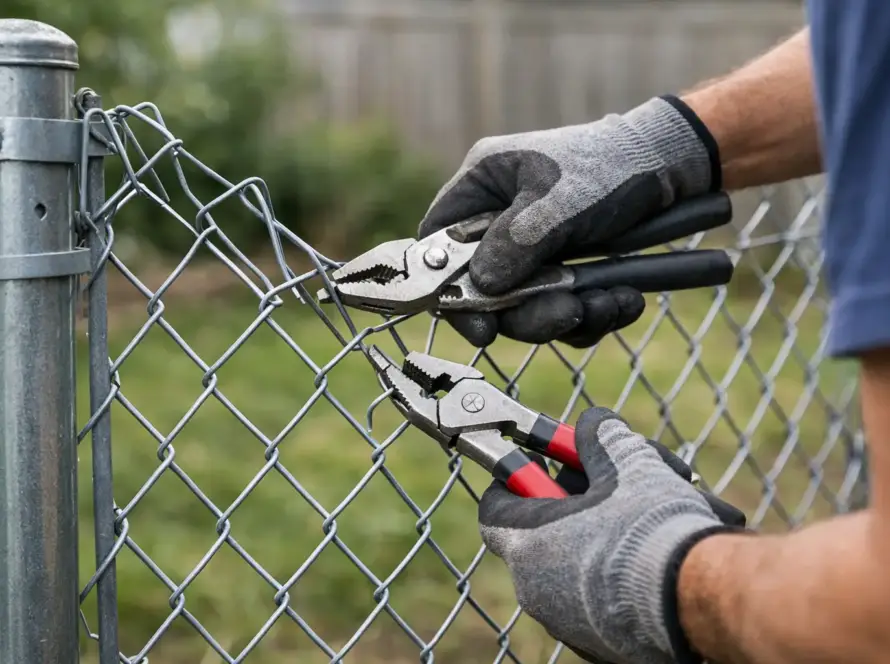
A fence around a commercial property has one job before anything else – define the boundary clearly and hold up under daily use. Commercial chainlink fences do that well, which is why they remain one of the most practical choices for warehouses, parking lots, schools, construction yards, retail backlots, and industrial sites. When the goal is dependable security without overcomplicating the project, chain link is hard to beat.
What makes it a smart option is not just the price. It is the balance of visibility, durability, speed of installation, and long-term value. A properly built commercial fence can secure a perimeter, guide foot traffic, protect equipment, and support access control, all without creating a heavy visual barrier that makes a site feel closed off.
Why commercial chainlink fences still make sense
Some property owners hear “chain link” and think basic or temporary. On a commercial site, that is often the wrong way to look at it. A well-installed chain link fence is a workhorse product. It handles day-to-day impact better than many decorative options, and it is easier to scale across a large perimeter without pushing a project budget too far.
That matters for businesses managing real operating costs. If you need to secure hundreds of feet of property line, the fence has to do its job consistently. It also has to make sense financially, not only on installation day but years later when maintenance, repairs, and tenant turnover become part of the equation.
Chain link also gives you sightlines. For many commercial properties, that is a benefit, not a drawback. Staff can see activity along the perimeter, security cameras have fewer visual obstructions, and lighting performs better across open areas. In a parking lot, storage yard, or service area, visibility often improves security rather than reducing it.
Where commercial chainlink fences work best
Commercial chainlink fences fit a wide range of properties, but they are especially useful where function comes first. Warehouses and distribution facilities often use them to secure loading zones and outdoor storage. Apartment complexes use them around utility areas, dog runs, and shared boundaries. Schools, churches, and sports facilities rely on chain link because it is durable, straightforward, and easy to repair if a section gets damaged.
They also work well for businesses that need to separate public-facing areas from restricted ones. A front parking lot may need a more polished entry treatment, while the side yard, dumpsters, equipment storage, or service alley needs practical security. In those cases, chain link can handle the heavy-duty role while gates and access points do the rest.
Not every property needs the same setup. A small commercial lot may only need a six-foot perimeter with one rolling gate. A larger industrial site may need higher fencing, barbed wire, reinforced posts, and multiple controlled access points. The right solution depends on the layout, usage, local code requirements, and how much security the site actually needs.
What affects strength and performance
The phrase “chain link fence” covers a lot of different build levels. Two fences may look similar from a distance but perform very differently over time. That is why material selection and installation quality matter.
Fence height is the first factor. Many commercial applications start at six feet, but some sites need more. If the property stores equipment, valuable inventory, or restricted materials, added height can be worth it. Thicker wire and heavier framework also increase strength, especially in areas where the fence may take impact from carts, vehicles, or repeated gate use.
The posts matter just as much as the mesh. Undersized posts or shallow footings can create problems long before the fabric fails. Leaning sections, loose top rails, and gate sag often start with poor structural support, not the chain link itself. A commercial installation should be built for the actual demands of the property, not just the minimum needed to finish the job.
Finish is another consideration. Galvanized chain link is common because it resists rust and keeps maintenance low. Vinyl-coated options can improve appearance and add another layer of protection, especially in black, which is popular for properties that want a cleaner, more modern look. In some settings, appearance plays a bigger role than people expect, particularly for office buildings, retail sites, schools, and mixed-use properties.
Gates are just as important as the fence
A commercial perimeter is only as functional as its access points. If the fence is strong but the gates are poorly planned, daily operations become harder than they need to be. That is why gate design should be part of the conversation from the start.
Swing gates can work well for pedestrian entries or lower-traffic service access. Rolling gates are often better for wider vehicle openings, especially where space is limited. Some businesses need manual gates. Others benefit from automated systems tied to keypads, remotes, card readers, or other access control measures.
The key is matching the gate to the site. A gate that is too narrow slows down deliveries. A gate that is too light may not hold up to frequent use. A gate placed in the wrong spot can create traffic problems on the property. Good planning solves those issues before installation begins.
Security upgrades that may be worth adding
Not every commercial chainlink fence needs every security feature. In fact, overbuilding can waste money if the site does not face a serious risk level. Still, some upgrades are worth considering when the property needs more protection.
Privacy slats can block direct views into storage or service areas, though they also increase wind load and change the appearance of the fence. Barbed wire or similar deterrents may be appropriate for industrial and high-security settings, but they are not right for every property and may be restricted by local rules. Stronger gate hardware, anti-climb measures, and better locking systems can often improve security without changing the fence dramatically.
Lighting and camera placement should also be considered alongside the fence, not after the fact. A strong perimeter works best when it supports the full security plan.
Repair or replace?
For property managers, this question comes up often. If part of the fence is leaning, damaged by a vehicle, or rusting at the base, replacement is not always the only answer. Many chain link systems can be repaired effectively when the damage is limited to certain sections, posts, rails, or gates.
The better choice depends on the age of the fence, the condition of the framework, and whether the existing layout still works for the property. If only one area failed because of impact, a repair may be the most practical route. If multiple sections are compromised, the gates no longer operate correctly, and the fence is undersized for current security needs, replacement may save money over time.
This is where an honest site evaluation matters. A dependable contractor should explain what can realistically be repaired, what should be replaced, and where spending more now may prevent repeat problems later.
What to expect from a quality installation
A commercial fence project should feel organized from the beginning. That starts with an on-site visit, accurate measurements, and a clear understanding of the property’s needs. It should also include practical questions about gate access, grading, vehicle flow, code requirements, and how the space is used every day.
From there, workmanship is what separates a fence that lasts from one that becomes a maintenance issue. Posts need proper spacing and solid concrete footings. Lines should be straight, gates should swing or roll cleanly, and hardware should be selected for commercial use, not treated like an afterthought. Clean installation matters because small shortcuts tend to show up quickly on busy properties.
In Los Angeles, property conditions vary a lot from one site to the next. Some projects involve tight access, uneven ground, or older boundaries that were never installed correctly in the first place. That is one reason many owners and managers prefer working with a contractor like Hawklink Fences that focuses on clear communication, dependable scheduling, and fence work built to last.
Choosing commercial chainlink fences with confidence
The best commercial fence is not always the heaviest or most expensive one. It is the one that fits the property, supports daily operations, and holds up without constant attention. For many businesses, chain link checks those boxes better than any other option.
If you are planning a new perimeter or dealing with a fence that no longer does its job, focus on the basics first: security level, access needs, material quality, and installation standards. Get those right, and the fence becomes one less thing to worry about – which is exactly what a good commercial fence should do.