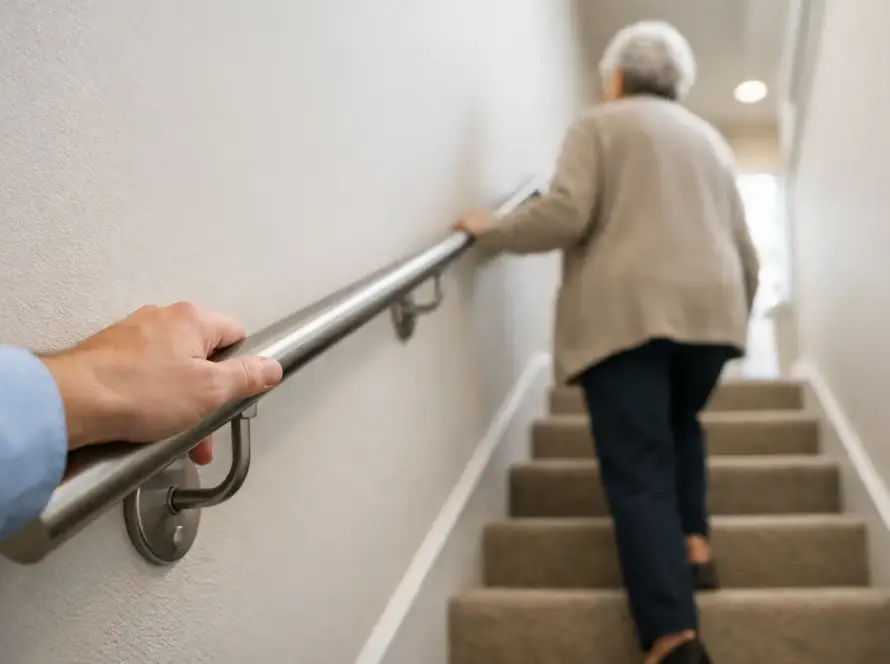
A stair railing is not a finishing touch you choose after the rest of the project is done. It is a safety feature people rely on every day, especially on exterior stairs, elevated entries, balconies, and multi-unit properties. The best railings for stairs balance secure grip, durable construction, local code requirements, and a look that fits the property.
For Los Angeles homes and commercial properties, material choice matters. Strong sun, occasional rain, coastal air in some areas, and frequent daily use can expose weak finishes and loose connections quickly. A quality railing should feel solid in the hand, stay securely anchored, and continue looking good without becoming a constant maintenance job.
Start With the Job the Railing Needs to Do
Before comparing materials, separate the two functions that are often grouped together. A handrail is the graspable rail used for support while walking up or down stairs. A guardrail is the protective barrier installed along an open side of a stairway, landing, deck, or balcony to prevent falls. One installation may need both.
That distinction affects the design. A simple wall-mounted handrail can be the right answer for a narrow concrete stairway. An open exterior staircase may need a full guardrail system with a properly sized handrail. Property owners should also consider who uses the stairs. Young children, older adults, tenants, customers, and delivery workers all benefit from a rail that is easy to grip and does not shift under pressure.
Local building requirements can vary based on the property type, stair layout, height above grade, and whether the work is new construction or a repair. Spacing between balusters or cables, rail height, handrail shape, and mounting details are not just design decisions. A professional site assessment helps identify the correct solution before fabrication begins.
Wrought Iron Railings for Strength and Character
For many exterior stairways, wrought iron-style railings remain one of the best choices. They offer a substantial feel, excellent resistance to impact, and design flexibility that works with Spanish Revival, traditional, Mediterranean, and contemporary Los Angeles architecture. Custom iron can be shaped for straight runs, turns, landings, and uneven masonry conditions that do not fit standard prefabricated systems.
Iron railings are especially practical where security matters as much as appearance. A well-built iron guardrail is difficult to damage, provides clear boundary definition, and can be fabricated with simple vertical pickets or more decorative details. Powder coating or a high-quality protective finish helps reduce the risk of corrosion and keeps the railing looking clean.
The trade-off is weight and maintenance. Iron needs sound anchoring, and chips in the finish should be addressed before rust spreads. This is not usually a demanding task, but it is worth inspecting exterior railings periodically, particularly around welds, base plates, and mounting points. For owners who want long-term durability with a custom look, iron is often the strongest overall value.
When Iron Makes the Most Sense
Choose iron when the stairway needs a secure, permanent barrier; when the property has existing iron gates or fencing to match; or when a custom shape is necessary. It is also a smart option for rental properties and commercial entries where the railing will receive frequent use.
Steel Railings for Clean, Modern Lines
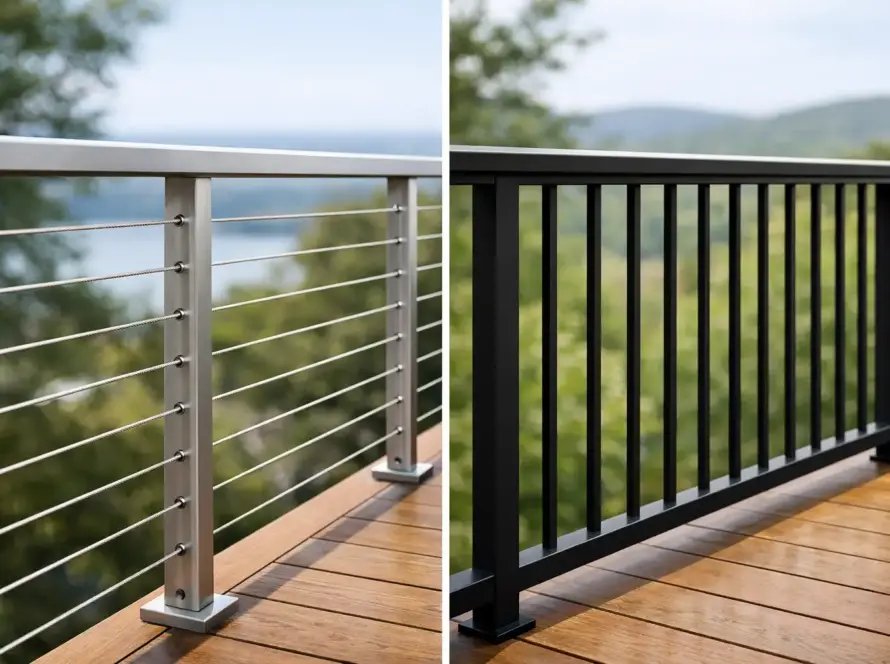
Steel railings provide many of the strength benefits of iron with a more streamlined appearance. They are a strong fit for modern homes, apartment buildings, office entrances, and renovated commercial spaces. Steel can be fabricated into simple vertical-picket systems, horizontal designs where permitted, or minimal-profile frames for cable infill.
The real advantage is precision. Custom steel fabrication allows the railing to follow the exact pitch of the stairs, meet cleanly at landings, and align with gates, fences, or security doors elsewhere on the property. A properly finished steel system can hold up very well outdoors, but the coating system matters. Poor surface preparation or thin paint can lead to premature wear.
For a straightforward, low-maintenance design, black powder-coated steel is a reliable choice. It gives a clean architectural look without demanding the upkeep of painted wood. As with iron, installation quality is central. Strong material cannot compensate for weak attachments to concrete, wood framing, or stucco-covered walls.
Cable Railings for Open Views
Cable railing systems are popular when the goal is to preserve a view or make a stair area feel more open. They use tensioned stainless steel cables within metal posts and rails, creating a lighter visual barrier than traditional pickets. For hillside homes, decks, contemporary entries, and staircases near landscaped areas, cable railings can deliver a clean, high-end result.
They are not the automatic best choice for every stairway. Cable systems require precise installation and proper tension. Loose cables are both unattractive and potentially unsafe. Depending on the layout and local requirements, cable spacing and deflection must be carefully planned so the finished system meets applicable standards.
Maintenance is also different. Stainless steel resists corrosion, but it still benefits from occasional cleaning, especially in areas exposed to dust, pollution, or coastal moisture. Cable rails are ideal when openness is the priority and the installation is handled with the care the system requires.
Wood Railings for Warmth, With Clear Limits
Wood railings bring warmth that metal cannot fully replicate. They can suit interior stairs, covered porches, and traditional homes where matching existing trim is more important than creating a modern exterior look. A painted or stained wood handrail can also be comfortable to grip and economical for certain projects.
For fully exposed outdoor stairs, however, wood requires more attention. Sun can fade it, moisture can cause checking or swelling, and neglected paint can peel. Connections may loosen over time as the wood expands and contracts. Pressure-treated lumber, quality sealers, and careful detailing improve performance, but wood is rarely the lowest-maintenance option for an exterior safety railing.
Wood works best where it is protected from the elements or when the owner is prepared for routine upkeep. If the main priorities are security and long-term exterior durability, steel or iron will usually be the better fit.
What Makes a Stair Railing Feel Safe
Material is only one part of the decision. The best railing design is one people can use confidently without thinking about it. The handrail should be continuous where required, comfortable to grasp, and placed at a practical height. Decorative shapes that look impressive but are difficult to hold can be frustrating on a daily-use stairway.
Posts and anchors deserve equal attention. Exterior railings may be mounted into concrete steps, masonry walls, wood framing, or steel structures. Each condition calls for the appropriate fastening method. An installer should evaluate the substrate rather than simply attach a rail where it is convenient. The railing should not wobble, flex excessively, or rely on surface materials that are not structurally sound.
For families and multi-unit properties, infill spacing matters. Openings that are too wide can create a safety concern for children and pets. Horizontal features can also create a climbable appearance, which may not be appropriate in every setting. A simple vertical-picket railing remains a dependable choice for many properties because it is durable, clear, and easy to maintain.
How to Choose the Right Look for Your Property
The railing should support the architecture, not compete with it. Black iron or steel works with nearly any exterior and coordinates easily with gates, fences, lighting, and security doors. Decorative iron can add character to older homes, while clean square posts and cable infill better suit contemporary renovations.
Think beyond the staircase itself. If the rail is at the front entry, it is one of the first details visitors see. Matching the railing finish to existing fencing or gates creates a more finished appearance. For apartment buildings and commercial properties, consistency across multiple stairways can also make future repairs and additions easier to manage.
A custom measurement is worth the effort when stairs have unusual angles, sloped landings, cracked concrete, or older construction details. Trying to force a standard railing kit into a nonstandard space often leads to awkward gaps, weak mounting, and a result that looks improvised.
Invest in Fabrication and Installation, Not Just Material
A railing can be made from premium steel and still fail early if welds, finish work, and anchors are rushed. Quality fabrication includes accurate measurements, smooth welds, clean transitions, proper coating, and mounting points designed for the actual site conditions. Those details are what keep a railing stable and presentable over time.
Hawklink Fences approaches handrail and stair railing projects with that practical standard: assess the site, recommend materials that fit the use, and build an installation that is made to last. Clear communication before work starts is especially valuable when a project involves code considerations, custom fabrication, or repairs to existing steps.
The right stair railing should make the route safer without making the property harder to maintain. Whether that means durable iron at a front entry, powder-coated steel at a rental property, or cable railing around a view-facing stairway, choose the system that will still feel solid and look right years after installation.