A fence can solve several rental-property problems at once: it defines who is responsible for a yard, discourages trespassing, gives tenants privacy, and makes the property look cared for. The best fence for rental property is rarely the most expensive option. It is the one that fits the property’s security needs, local requirements, maintenance budget, and expected tenant use without becoming a constant repair issue.
For Los Angeles landlords and property managers, the decision also comes down to climate and durability. Strong sun, dry conditions, occasional heavy rain, hillside lots, and busy streets can all affect which material will hold up best. A practical fence should protect the investment while remaining straightforward to maintain between tenancies.
What Makes the Best Fence for Rental Property?
Rental fencing should be judged differently than fencing for an owner-occupied home. A homeowner may choose a material mainly for a particular look. A landlord needs a fence that performs well even when tenants change, landscaping is inconsistent, or a gate gets frequent use.
Start with the purpose. A front-yard boundary near a sidewalk may need visibility and a controlled entry point. A shared driveway may require a durable gate and clearly defined access. A backyard for a single-family rental may need privacy and a secure enclosure for children or pets. Properties near alleys, commercial areas, or high-traffic streets often need more security than a quiet residential lot.
The strongest rental-property choices balance five factors: durability, repairability, security, appearance, and long-term cost. The lowest installation price is not always the lowest ownership cost. For example, a light wood fence may cost less up front but require regular repairs, staining, and panel replacement. A properly installed iron or chain link fence can last much longer with fewer service calls.
1. Chain Link Fencing for Security and Value
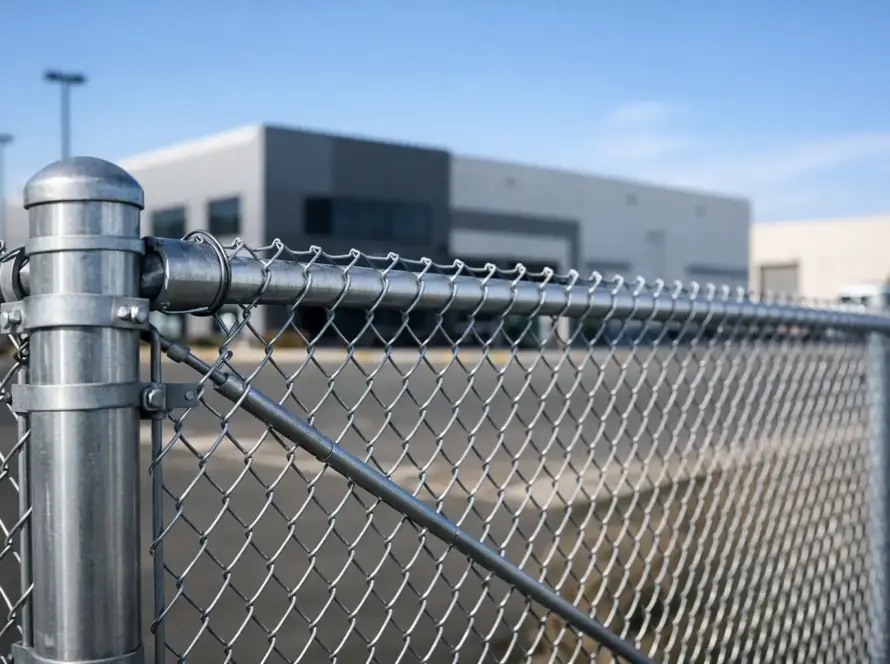
Chain link is often the most practical option for rental properties that need a strong, budget-conscious perimeter. It is especially useful for side yards, rear property lines, parking areas, apartment buildings, utility spaces, and lots where visibility matters.
Galvanized chain link resists rust and handles regular wear well. If a section is damaged, it can usually be repaired without replacing the entire fence. That matters when a tenant backs into a gate, landscaping crews damage a panel, or a delivery vehicle catches a corner post.
For a cleaner appearance, black vinyl-coated chain link can blend more naturally into residential landscaping. Privacy slats may be an option where screening is needed, although they add cost and can catch wind. Chain link is not the right choice for every front yard or upscale rental, but it remains one of the best values when security, durability, and easy maintenance are the priorities.
2. Wrought Iron-Style Fencing for Curb Appeal and Control
Iron fencing is a strong choice for front yards, walkways, multifamily properties, and rentals where curb appeal affects tenant interest. It creates a defined boundary without closing off the property visually, which can be useful in neighborhoods where an open front-yard appearance is preferred.
A professionally fabricated and installed iron fence offers excellent strength. It is difficult to climb compared with many wood and vinyl styles, and it pairs well with pedestrian gates, driveway gates, security doors, and matching handrails. The open design also lets property managers see into the yard or entry area without sacrificing the sense of a protected perimeter.
The trade-off is cost. Iron typically requires a larger initial investment than chain link or basic wood. However, a quality powder-coated finish and solid posts can provide years of service with limited maintenance. Inspect for chips or scratches periodically and address exposed metal before rust spreads. For properties with a visible street frontage, iron can be a smart upgrade that supports both security and rental appeal.
3. Vinyl Fencing for Low-Maintenance Privacy
Vinyl fencing is popular for single-family rentals because it provides a clean, private boundary without the ongoing staining or painting associated with wood. It can work well around backyards, patios, and pool-adjacent areas when installed to the correct height and code requirements.
For landlords, the main benefit is consistency. Vinyl does not rot, splinter, or attract termites, and a simple cleaning can often restore its appearance between tenants. White vinyl is common, but tan, gray, and other neutral colors may be a better match for the building exterior and may show less dust in Southern California.
Vinyl is not indestructible. It can crack under a hard impact, and lower-quality panels may warp or become brittle with prolonged sun exposure. Choose a proven product with reinforced rails and have the posts set correctly. A vinyl fence that is poorly installed can lean, rack, or loosen long before the panels themselves fail.
4. Wood Fencing for Privacy on a Managed Budget
Wood remains a practical privacy-fence option when the look of natural material suits the property. A properly built wood fence can make a modest backyard feel more usable and private, which is often a meaningful benefit for families, pet owners, and long-term tenants.
The key is setting realistic maintenance expectations. Wood needs periodic inspection for loose boards, cracked pickets, rot near the ground, and weathered finish. Gates deserve special attention because sagging gates are one of the most common rental-property fence complaints.
For better durability, use quality posts, proper concrete footings, and materials designed for exterior exposure. A fence should not sit directly against soil or sprinklers, where repeated moisture can speed up deterioration. If the property has automatic irrigation, make sure sprinkler heads are not consistently spraying the fence line.
Wood makes sense when privacy is the primary goal and the owner is prepared to maintain it. It may be less suitable for a rental with high turnover, neglected landscaping, or repeated tenant damage. In those cases, vinyl or iron can offer fewer surprises over time.
5. Composite Fencing for Long-Term Ownership
Composite fencing combines the privacy of a solid-panel fence with lower maintenance than wood. It is often a good fit for landlords who plan to hold a higher-end rental property for many years and want a polished appearance without routine painting or staining.
Composite materials vary widely in quality, so the installation details matter. Posts, rails, expansion spacing, and hardware must be matched to the product. Cheaper systems can fade, bow, or look uneven if they are not designed for the site conditions.
The initial price is usually higher than wood or basic vinyl. Still, for a premium rental with a visible patio, courtyard, or outdoor living area, composite can support a higher-quality presentation. It is most worthwhile when privacy and appearance directly affect the property’s rental position.
Do Not Overlook Gates, Height, and Access
A fence is only as functional as its gates. A loose latch, dragging driveway gate, or weak pedestrian gate can create a daily frustration for tenants and a security concern for the owner. Use durable hinges, self-closing hardware where appropriate, and locks that match how the property will be accessed and managed.
Fence height should be selected with both privacy and local rules in mind. Height limits can differ between front yards, side yards, rear yards, corner lots, and properties near driveways where sightlines matter. A pool enclosure has separate safety requirements and should never be treated as a standard privacy fence project. Before construction, confirm property lines, required permits, and any homeowner association restrictions that apply.
For multifamily properties, access control deserves extra planning. A gate may need to accommodate residents, maintenance teams, trash service, emergency access, or package delivery. The right solution is not always the most complicated one. It is the one that tenants can use reliably and management can secure easily.
Choosing the Right Fence for Your Property
If the priority is a secure, affordable perimeter, chain link is often the strongest starting point. If street-facing appearance and controlled access matter most, iron fencing is hard to beat. For private backyard rentals, vinyl provides dependable low-maintenance screening, while wood offers a traditional look for owners willing to maintain it. Composite is best reserved for long-term, higher-end projects where appearance and reduced upkeep justify the investment.
A site visit can reveal issues that photos and measurements miss, including grade changes, existing concrete, drainage, old post locations, or gate-clearance problems. Hawklink Fences helps property owners evaluate those details before installation, with clear estimates and workmanship built to last. A well-chosen fence should make the next lease, inspection, and turnover easier – not add another item to the repair list.