A damaged side gate, an open rear lot, or a fence that can be climbed in seconds can create a real exposure for a business. Learning how to secure a business perimeter starts with looking beyond the front entrance. Your property line, access points, storage areas, and after-hours routines all need to work together to discourage unauthorized entry and make weak spots harder to exploit.
The right setup does not have to make a property look closed off or unwelcoming. A well-planned perimeter can protect equipment, employees, customers, and inventory while still supporting daily deliveries, parking, and curb appeal. The best approach depends on the property, the type of business, and where the actual risks are.
How to Secure a Business Perimeter Starts With a Walkaround
Before choosing a fence style or adding a gate operator, walk the entire property as though you were trying to enter without permission. Do this during the day and again after dark. Look for gaps under fencing, loose panels, low walls, blocked sightlines, overgrown landscaping, poorly lit corners, and doors that are hidden from public view.
Pay close attention to the areas that receive the least traffic. Rear service entrances, side yards, dumpster enclosures, loading zones, utility areas, and employee parking can become easy access points when they are not clearly defined or properly secured. A front-facing storefront may look protected while the back of the building remains exposed.
It also helps to consider how your business operates. A warehouse may need controlled vehicle access and secure material storage. A multifamily property may need gates that improve resident safety without slowing down everyday entry. A retail location may need a visible boundary, strong security doors, and better lighting around delivery areas. Security works best when it supports the way people actually use the site.
Build a Physical Boundary That Fits the Property
A perimeter fence is often the foundation of commercial security. It creates a clear line between public and private space, limits access to designated entry points, and makes it more difficult for someone to approach the building unnoticed.
Chainlink fencing is a practical choice for many commercial properties because it is durable, visible, and adaptable to large lots. It is commonly used around parking areas, equipment yards, storage spaces, and industrial properties. Height, gauge, post spacing, and gate design matter just as much as the fence material. A light-duty fence may define a boundary, but it may not be the right choice for a site with valuable inventory or repeated trespassing issues.
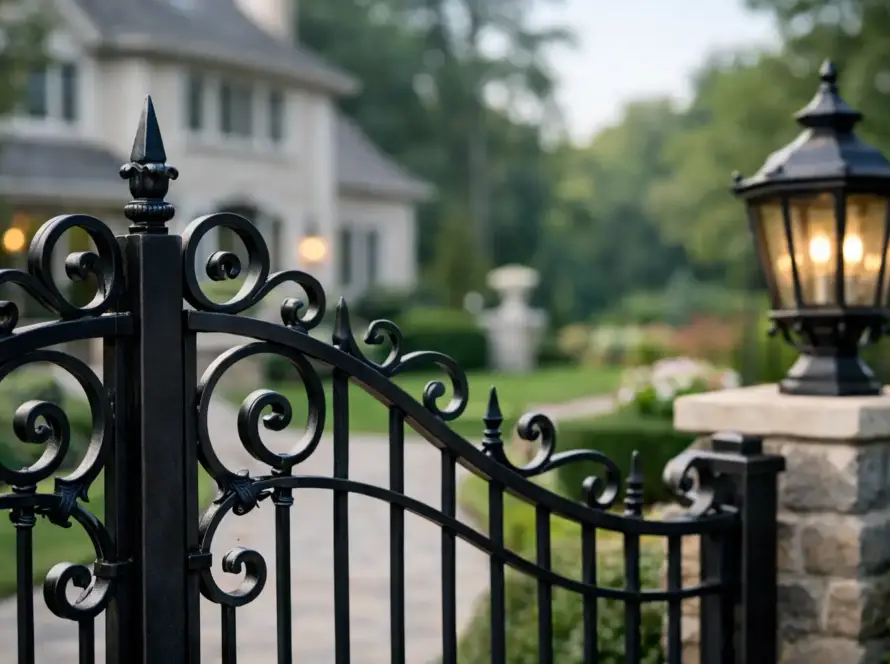
For properties where appearance is a higher priority, ornamental iron fencing can provide a stronger visual presence while maintaining visibility. It works well for office buildings, apartment communities, schools, storefronts, and properties that need security without the look of a solid barrier. Custom fabrication can help accommodate sloped ground, unusual property lines, and entry areas where standard panels do not fit cleanly.
Solid fencing has its place too, particularly where privacy is needed. The trade-off is that a fully blocked view can create hiding places if lighting and surveillance are limited. In many cases, a combination of materials works better than relying on one fence type around the entire site.
Do Not Overlook Fence Repairs
A compromised fence sends the wrong message. Bent posts, cut chainlink, rusted sections, damaged welds, and gates that do not latch properly make a property easier to access and can signal that the site is not regularly maintained.
Timely fence repair is usually less expensive than replacing a larger section after the damage gets worse. It also keeps small problems from becoming a daily operational headache for tenants, employees, or property managers. Check fencing after storms, construction activity, vehicle impacts, and any reported trespassing incident.
Secure Gates as Carefully as the Fence Line
A strong fence is only as effective as its gates. Gates need to open easily for authorized users, close fully every time, and resist forced entry when the property is unattended.
Start by limiting the number of access points where possible. Every additional gate requires maintenance, oversight, and a clear reason for being open. A gate that is rarely used can become a weak link if keys are widely shared or the latch is unreliable.
Pedestrian gates should have dependable self-closing and self-latching hardware where appropriate. Vehicle gates need properly sized posts, hinges, tracks, rollers, and locking points. Sliding and swing gates should be selected based on available space, traffic patterns, and the type of vehicles entering the property. A gate that is too narrow or poorly positioned can encourage employees and delivery drivers to leave it open for convenience.
For higher-security properties, access control can add another layer. Keypads, card readers, remotes, intercoms, and managed credentials can limit entry to approved users and create better accountability. However, technology should not be used to cover up poor gate construction. An access system cannot compensate for a sagging frame, weak latch, or damaged track.
Improve Visibility After Hours
Most perimeter problems become more serious when no one can see what is happening. Lighting does not stop every attempt at entry, but it removes cover and helps employees, neighbors, cameras, and patrols spot unusual activity.
Install lighting around gates, walkways, rear doors, parking areas, loading zones, and corners where the building or landscaping blocks sightlines. Motion-activated lights can be useful in low-traffic areas, while consistent lighting may be better for busy entrances and parking lots. The goal is coverage without creating glare that makes cameras or drivers less effective.
Keep shrubs, trees, stacked materials, and storage containers from blocking fences or creating concealed areas near doors. Landscaping should support security, not interfere with it. Clear visibility from the street or neighboring properties can be an advantage, especially for businesses in dense Los Angeles commercial areas.
Protect Doors, Windows, and Interior Access Points
The perimeter does not end at the fence. Once someone reaches the building, exterior doors and windows become the next line of defense. Service doors, back doors, and doors leading to storage rooms deserve the same attention as the main entrance.
Security doors and properly installed hardware can add protection where standard doors are not enough. Check that frames are secure, locks engage correctly, hinges are protected where needed, and closing mechanisms are not being defeated by door wedges or damaged latches. A door that employees struggle to use safely will often be propped open, which defeats the purpose of the upgrade.
Windows near ground level may need added protection depending on the location and what is visible inside. This does not always mean making the building look like a fortress. The right choice may be better lighting, security film, fencing setbacks, or targeted protective grilles in vulnerable areas.
Match Your Security Plan to the Risk
Not every business needs the same level of perimeter protection. A small office with limited after-hours activity has different needs than a contractor yard storing tools and materials overnight. Spending should focus first on the most likely and most costly risks.
If theft is the main concern, prioritize secure storage zones, gates, lighting, and visibility. If unauthorized parking or loitering is causing problems, clearer boundaries and controlled access may make the biggest difference. If employee safety is the concern, focus on well-lit walking routes, safe handrails, functioning gates, and reliable access at the start and end of shifts.
Avoid installing security features one piece at a time without a plan. A taller fence may be useful, but not if the side gate still does not lock. Cameras may help document an incident, but they are more useful when lighting and clear sightlines allow them to capture usable footage. Good perimeter security is layered, with each part supporting the next.
Choose Installation That Will Last
Commercial fencing and gates take daily wear from weather, vehicles, foot traffic, and repeated use. Material quality and installation details determine whether the system holds up over time. Posts need proper footing, gates need accurate alignment, and fabricated components need to fit the property rather than being forced into place.
For business owners and property managers, clear communication matters too. You need to know what is being installed, how access will be maintained during the work, and what maintenance the system will require. A dependable contractor should assess the site, explain practical options, and provide a clear estimate without pressuring you into upgrades that do not solve the problem.
A secure business perimeter is built through practical choices: a fence that fits the site, gates that close and lock, lighting that exposes weak areas, and routine maintenance that keeps small failures from becoming open invitations. Start with the vulnerable spots you can see, then bring in a qualified fencing professional to help turn those observations into a boundary that does its job every day.