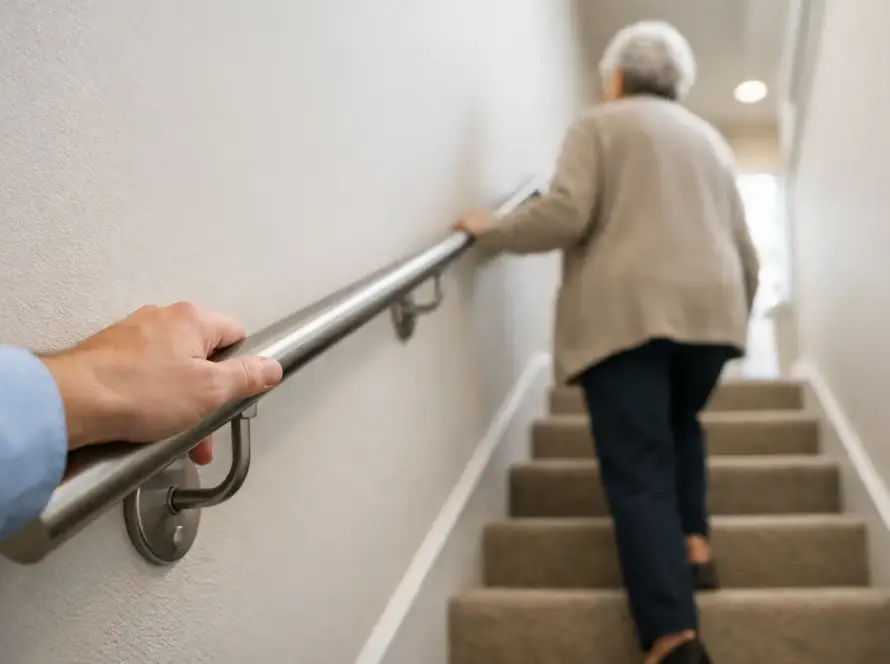
A single missed step can turn an ordinary staircase, porch, or garage entry into a serious safety concern. Handrail installation for elderly family members gives them a stable point of contact where balance may be uncertain, helping them move through their home with more confidence and less reliance on others.
The right handrail is not just a piece of metal attached to a wall. It needs to be placed at the right height, anchored into solid structure, comfortable to grip, and designed around the way a person actually uses the space. A well-built rail can make daily routines safer without making a home feel institutional.
Why Handrails Matter for Aging at Home
Falls are a major concern for older adults, especially on stairs, uneven walkways, sloped driveways, and entry steps. Changes in strength, vision, mobility, or balance can make a surface that once felt familiar more difficult to navigate. A secure handrail provides steady support during transitions, when a person is stepping up, stepping down, turning, or carrying an item.
Handrails also help family members, caregivers, and guests. For a homeowner planning to age in place, adding rails early is often easier and less stressful than waiting until an injury or close call creates an urgent need. It is a practical improvement that supports independence while protecting the people who use the property every day.
In Los Angeles homes, this work can be especially valuable at raised front entries, exterior stairways, hillside walkways, detached garages, and older properties with uneven concrete or narrow steps. The best solution depends on the layout, the wall or surface available for mounting, and the needs of the person who will use it.
Where Elderly Handrail Installation Helps Most
The most obvious location is a staircase, but stairs are not the only place that deserves attention. A few steps at a front door can be difficult in rain, low light, or when someone is carrying groceries. A rail along a sloped walkway can provide support even where there are no formal steps.
Interior stairs should have a continuous, easy-to-reach rail from the first step to the last. On wider stairways, a rail on both sides may be the better choice. One rail may meet basic requirements in some situations, but two rails can give an older adult options if one side of the body is weaker or if they need additional stability.
Exterior installations deserve the same care. Porch steps, back patios, pool-area changes in elevation, side-yard paths, and garage entries can all become trouble spots. Outdoor rails must be built from materials that stand up to sun, moisture, and daily use without becoming loose, corroded, or rough to the touch.
Do Not Overlook Short Runs of Steps
Homeowners sometimes assume a rail is unnecessary for two or three steps. In reality, short stair runs can be easy to misjudge because people tend to move through them quickly. If an older resident uses that entrance often, or if the steps are steep, uneven, or exposed to weather, a handrail is worth considering.
A handrail is also useful beside a small threshold step, even when a larger staircase elsewhere already has a rail. Safety improvements should follow the person’s daily path through the home, not just the most visible architectural feature.
Choosing a Handrail That Is Easy to Use
A handrail should be comfortable enough to hold firmly without forcing the user to stretch or strain. Round and rounded profile rails are often easier to grip than wide, flat surfaces. The rail should allow a hand to wrap around it naturally and move along it without interruptions from sharp brackets or decorative elements.
Height matters as well. Building codes commonly guide handrail height and spacing, but a professional should also consider the user’s reach and posture. A rail set too high may not provide support when it is needed. One set too low can require uncomfortable bending. The goal is a rail that feels natural from the first step to the last.
Continuity is another key detail. A person should not have to release the rail before reaching level ground. Ends should return safely toward the wall, post, or floor where appropriate, reducing the chance that clothing, bags, or a hand catches on an exposed edge.
Material Choices: Strength, Maintenance, and Appearance
Steel and iron handrails are popular choices because they are strong, versatile, and well suited for custom fabrication. They can be shaped to follow stairs, ramps, turns, and uneven outdoor grades. With a quality finish, they provide long-term durability while fitting a wide range of home styles.
Aluminum is another option for some applications. It is lightweight and corrosion-resistant, which can make sense for certain exterior locations. The trade-off is that not every aluminum system offers the same solid feel or custom design flexibility as fabricated steel or iron.
Stainless steel can provide a clean, modern look and excellent corrosion resistance, particularly in exposed areas. It can cost more, so it is often selected when the design and long-term finish justify the investment. Wood rails may suit an interior setting, but they require ongoing maintenance and can become worn or slippery if neglected.
For most elderly safety installations, the best material is the one that combines a secure grip, proper anchoring, low maintenance, and a look that works with the property. Appearance matters, but it should never come before stability.
Proper Anchoring Is the Difference Between a Rail and Real Support
A handrail must withstand repeated pulling force. That is why installation should never rely on weak anchors, damaged stucco, decorative trim, or surface materials that cannot support the load. A rail that looks secure but shifts when grabbed can create more danger than having no rail at all.
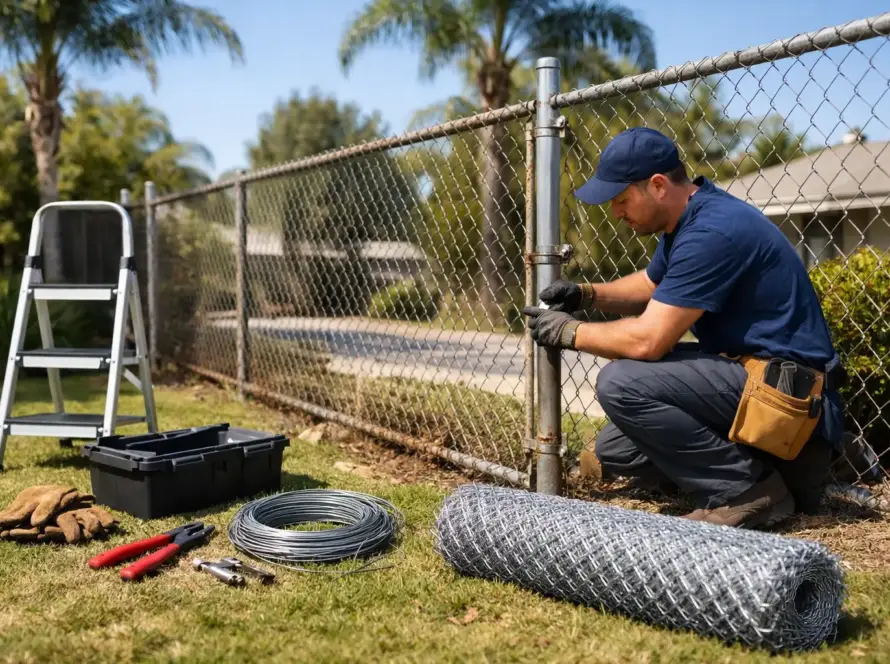
Wall-mounted rails need to be attached to suitable framing or a properly engineered backing system. Freestanding rails need posts set into stable concrete or secured with appropriate base plates and fasteners. On older homes, installers may need to account for cracked concrete, hollow block walls, deteriorated wood, or nonstandard stair dimensions before beginning the work.
This is where an on-site assessment matters. A contractor should inspect the mounting area, take accurate measurements, identify obstacles, and explain how the rail will be secured. If a surface needs repair before installation, that should be discussed clearly rather than hidden in a vague estimate.
Code Compliance Supports Safer Results
Handrail and guardrail requirements are not identical. A handrail is intended to provide something to hold while using stairs or ramps. A guardrail is designed to prevent falls from an elevated edge, such as a balcony, landing, or raised deck. Some locations need both.
Local building requirements may affect rail height, opening sizes, extensions, post spacing, and mounting methods. Requirements can vary based on whether the work is at a private residence, rental property, multifamily building, or commercial location. A qualified installer can help identify the appropriate approach for the property instead of treating every rail as a basic add-on.
Plan Around the Person, Not Just the Staircase
Before choosing a design, think about how the resident moves through the space. Do they use a cane or walker? Do they favor one side of the body? Do they pause at landings? Are they likely to use the stairs at night? These details influence rail placement, length, lighting needs, and whether a second rail would provide better support.
Good lighting is often an important partner to handrail installation. A secure rail helps little if the edge of a step disappears in shadow. Non-slip tread surfaces, repaired concrete, and clear walkways can also improve safety. These upgrades do not need to happen all at once, but they should be considered together when evaluating an entry or stairway.
Avoid choosing a rail only from a photo. Decorative designs with wide gaps, sharp details, or hard-to-grip profiles may look attractive but fail the daily usability test. A simple, well-proportioned rail with a smooth finish is usually the stronger long-term choice.
What to Expect From a Professional Installation
A reliable installation begins with a site visit and clear measurements. The contractor should discuss where support is needed, review material and finish options, assess the mounting conditions, and provide a straightforward estimate. Custom fabrication may be necessary when stairs curve, landings change direction, or existing concrete does not follow standard dimensions.
During installation, the work area should be treated with care. The rail should be aligned cleanly, securely fastened, and checked for movement before the project is complete. Once installed, it should feel solid under a firm grip, with no wobble, sharp edges, or uncomfortable interruptions along the route.
For homeowners and property managers, quality workmanship is worth prioritizing. A low-price installation that uses inadequate hardware or skips proper preparation can lead to costly repairs and, more importantly, avoidable safety risks.
A carefully designed handrail can make a home easier to use without changing its character. If a staircase, entry, or walkway no longer feels as secure as it should, an on-site consultation with a dependable local contractor such as Hawklink Fences can turn that concern into a solid, lasting safety improvement.