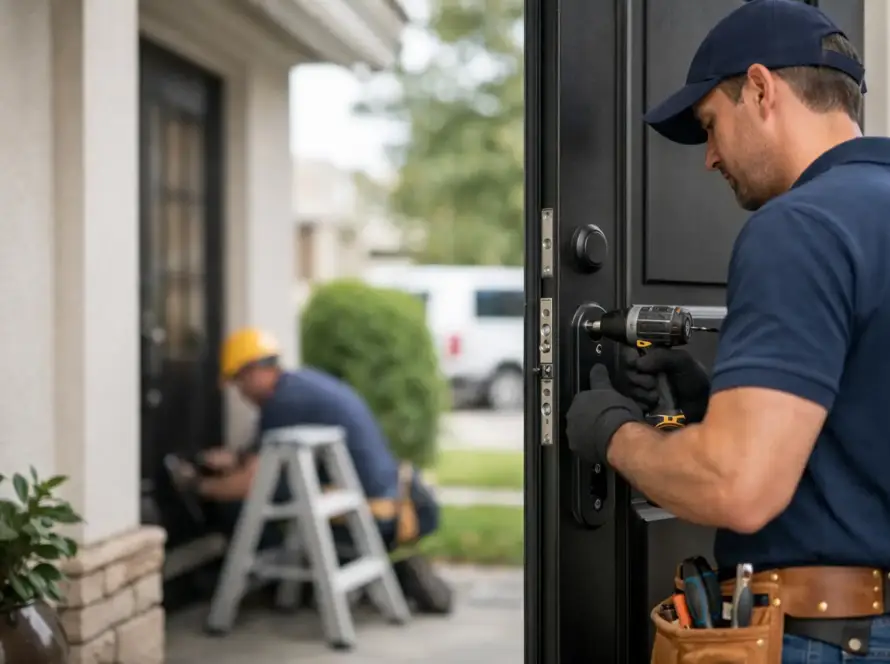
A front door has one job until you need it to do several: welcome guests, let fresh air in, hold up to daily use, and help protect the property after hours. When comparing security doors vs screen doors, the right choice comes down to what you need most. A screen door is built primarily for ventilation and insect control. A security door is built to create a stronger protective barrier while still allowing light and airflow.
For Los Angeles homeowners, landlords, and business owners, that distinction matters. Warm weather makes airflow valuable, but a lightweight exterior door can also become the weakest point at an entry. Choosing well means looking beyond the appearance of the mesh and considering the frame, hardware, installation, and how the door will be used every day.
Security Doors vs Screen Doors: The Main Difference
A standard screen door is designed to sit in front of an entry door and provide a simple layer of screening. It usually has a lightweight aluminum, vinyl, or wood frame with fiberglass or aluminum mesh. It can keep out flies and mosquitoes, allow a breeze through, and reduce the need to keep the main door open. That makes it a practical choice for lower-risk entries where ventilation is the main goal.
A security door is a heavier-duty exterior door assembly. It generally uses a steel or reinforced aluminum frame, welded construction, stronger hinges, a reinforced lock area, and security-grade mesh or decorative steel bars. The goal is not simply to cover an opening. It is to resist forced entry while creating a usable, ventilated barrier in front of the main door.
The difference is easiest to see at the points that take force. On a quality security door, the frame is anchored into solid structure, the hinges are protected or reinforced, and the locking system is designed to work with the door rather than act as an afterthought. A typical screen door does not offer that level of resistance, even if it has a latch or a lock.
How Protection and Construction Compare
A screen door may discourage casual tampering, but it should not be treated as a security upgrade. Standard screen mesh can be cut or pushed through, and light frames can bend under pressure. Its latch may keep the door closed in normal use, but it is not meant to withstand a serious attempt to enter the property.
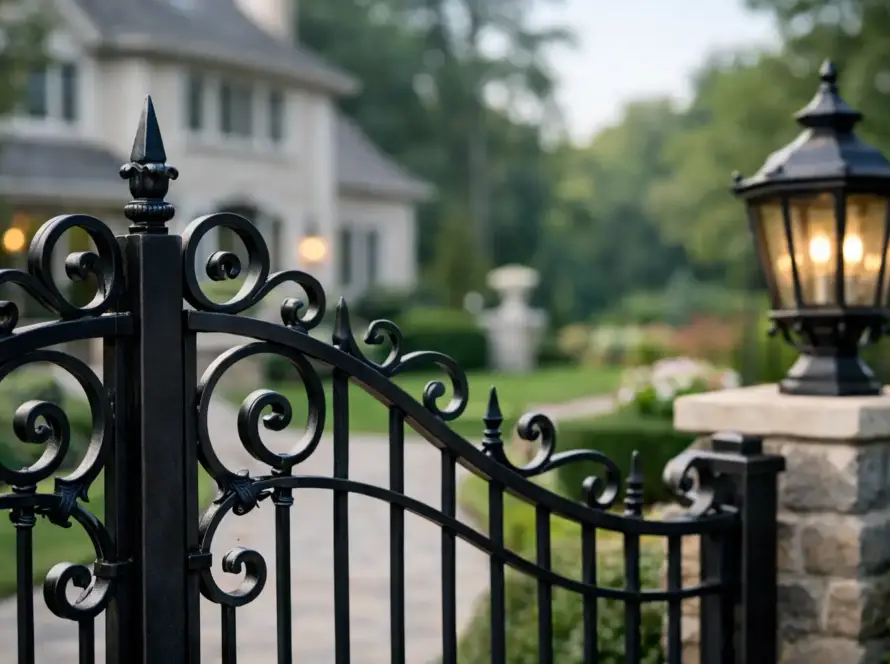
Security doors are made for a different purpose. Steel construction, welded corners, heavy-duty hinges, and reinforced strike areas help create a more difficult barrier to defeat. Some use perforated metal mesh that provides visibility and airflow while resisting cutting and impact better than ordinary insect screen. Others use iron pickets, scrollwork, or custom fabricated patterns for a more traditional appearance.
Not every security door performs the same way. A door can look strong while still having weak hardware, thin material, poor welds, or an improperly anchored frame. The installation is just as important as the door itself. If the frame is attached only to weak trim or the lock does not engage properly with the structure, the system cannot deliver the protection it was designed to provide.
For commercial properties and rental units, this is especially relevant. A busy entry may be opened and closed dozens of times per day. The door needs to stay aligned, latch reliably, and handle repeated use without sagging or dragging. Durable materials and careful fabrication pay off over time.
Airflow, Visibility, and Curb Appeal
Screen doors have a clear advantage when the priority is an unobstructed view. Fine mesh can nearly disappear from a short distance, and many residential screen doors have a light, simple appearance. They are also available in retractable and self-closing styles that fit homes where a visible exterior door is not desired.
A security door can still provide plenty of airflow, but the amount depends on its design. A full-view security mesh door lets in more light and air than a solid steel design with small openings. Decorative iron doors may provide a more substantial visual statement while offering less open area. This is where custom fabrication can make a real difference: the design can match the home, the entry size, and the desired level of privacy.
For a front entry, appearance should not be treated as separate from function. The door is one of the first things visitors see. A well-designed security door can add character to a Spanish-style home, a modern property, or a small commercial storefront. It can also help a property feel occupied and cared for, which matters to many owners and managers.
Privacy is another factor. If the main entry has glass panels or a sidelighted door, a security door can limit direct access and make it harder for someone to get close to the glass. A screen door does little to address that concern. On the other hand, if privacy is already handled by the entry design and the neighborhood is low-risk, a screen door may be all that is needed.
When a Screen Door Makes Sense
A screen door is often the right fit for a protected side entrance, a patio access door, or a home where the main concern is keeping insects out while allowing air to circulate. It can also be a cost-conscious option when the existing entry door is secure and the screen door will not be relied on for protection.
For example, a homeowner may choose a basic screen door for a back door that opens into a fenced, private yard. A restaurant or office may use a screen door in a non-public service area where ventilation is needed but the building is already secured by another door or gate. In these situations, paying for a heavy security door may not be necessary.
The key is to be honest about the door’s role. A screen door is a convenience product first. If you would not feel comfortable leaving the main door open behind it after dark or while away from the room, it is not serving as a security barrier.
When a Security Door Is Worth the Investment
A security door is a better choice for front entries, side doors, ground-level access points, and commercial doors that need added protection without sacrificing daylight or ventilation. It is also useful for rental properties, where a durable, low-maintenance entry solution can reduce repeated repair calls and provide more confidence for tenants.
In Los Angeles, exterior doors are often exposed to strong sun, dust, frequent use, and varying neighborhood conditions. A properly finished steel or iron security door can hold up well when it is built with quality materials and maintained correctly. For coastal-adjacent areas or properties exposed to moisture, the finish and corrosion protection deserve extra attention.
Security doors are not only for high-risk properties. Many homeowners choose them because they want to enjoy fresh air without leaving their main entry unprotected. Others want a stronger visual boundary at the front of the home. For businesses, the value may be in protecting a secondary entrance, storage room, or office access point while keeping the space less closed-in during operating hours.
Cost, Installation, and Long-Term Maintenance
Screen doors usually cost less upfront because the materials and installation are simpler. They can be a sensible purchase when basic screening is all that is required. However, frequent use, bent frames, torn mesh, and worn closers can lead to repairs or replacement sooner than expected.
Security doors cost more because they require heavier materials, stronger hardware, and more precise installation. Custom sizing, decorative work, lock upgrades, and difficult entry conditions can add to the price. Still, the right door can provide long-term value by improving protection, reducing maintenance issues, and adding a finished look to the property.
Before installing either option, measure more than the doorway. Check the condition of the surrounding frame, the swing direction, clearance for steps or handrails, the location of the existing lock, and whether the door needs to meet fire and emergency exit requirements. A security door should never interfere with safe egress. For a commercial property, accessibility and local code requirements may also affect the design.
Maintenance is straightforward but should not be ignored. Screen doors need occasional mesh repair, track cleaning, and closer adjustments. Security doors should be inspected for loose fasteners, worn weatherstripping, finish damage, hinge movement, and lock alignment. Touching up scratches before metal is exposed can help prevent corrosion and keep the door looking cared for.
The best choice is the one that matches the real risk at the entry, not the one that simply looks stronger or costs less. If ventilation is the goal, a screen door may be enough. If you want airflow with a serious layer of protection, a properly fabricated and installed security door is the better answer. A clear on-site assessment from a qualified contractor can help you choose a door that fits the opening, the property, and the way you use it every day.