A gate can look great on installation day and still become a daily frustration if it scrapes the driveway, sags under its own weight, or does not give you enough room to enter comfortably. Knowing how to plan a custom gate before fabrication starts helps prevent those problems. The right plan balances security, access, appearance, and the structural work needed to keep the gate operating properly for years.
For a Los Angeles home, rental property, or business, that usually means looking beyond the gate panel itself. Posts, hinges, latch placement, slope, vehicle clearance, and local requirements all affect the final result.
Start With the Job the Gate Needs to Do
The first decision is not color or decorative details. It is the gate’s primary purpose. A pedestrian entry gate should make everyday access easy while creating a clear boundary around the property. A driveway gate needs enough opening width for vehicles, delivery access, and trash collection when applicable. A commercial gate may need to prioritize controlled access, visibility, and resistance to heavy use.
It is common for a property owner to want one gate to handle everything: privacy, security, curb appeal, pet containment, and vehicle access. That can work, but each goal has trade-offs. A solid privacy gate offers more screening but catches more wind than an open iron design. A very wide double-swing gate may provide excellent clearance but needs stronger posts and more room to operate. Defining the main job first gives the design a clear direction.
Think about who will use the gate and how often. A side gate used several times a day needs reliable, easy-to-operate hardware. A service entrance may need a wider opening and a latch that maintenance crews can use without difficulty. For a business, consider whether employees, customers, vendors, or emergency personnel need access.
Measure the Opening and the Space Around It
Accurate measurements are the foundation of a custom gate. Measure the clear opening between the planned posts or existing structural supports, then measure it again. Also check the height you want from finished ground level, not from an uneven section of soil or pavement.
The space around the opening matters just as much. A swing gate needs a clear path to open. Before choosing an inward or outward swing, look for vehicles, walkways, planters, stairs, doors, utility equipment, and changes in grade. An inward-swinging driveway gate may be the practical choice when a public sidewalk is close to the property line, but it still needs enough room inside the property.
A sliding gate can be a better fit when there is limited swing room. It requires a clear run along the fence line for the gate to travel, along with the proper track, cantilever system, or support arrangement. The best option depends on the available layout, the gate’s weight, and how often it will be used.
Driveway gates deserve special attention. Measure the opening at the narrowest usable point, and consider turning space rather than measuring only the width of a single vehicle. A gate that barely clears a car can be inconvenient for trucks, moving vans, service vehicles, or tenants with larger vehicles.
Account for Slopes and Drainage
Southern California properties often have sloped driveways, uneven side yards, or grades that change from one end of an opening to the other. A gate that swings across a rising driveway may drag or stop before it opens fully. Raising the gate can solve clearance issues, but it may create an unwanted gap beneath it.
This is where a site visit is valuable. A contractor can assess whether the gate should be racked to follow the slope, built with added ground clearance, converted to a sliding design, or paired with adjustments to the surrounding surface. Drainage should also be considered so water does not collect near posts, tracks, or latches.
Choose a Gate Style and Material That Match the Property
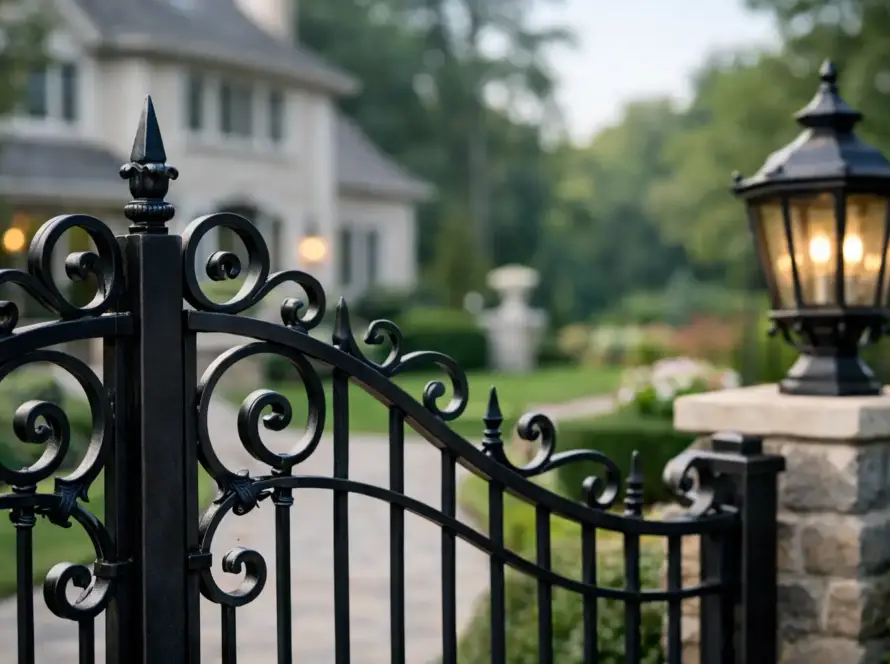
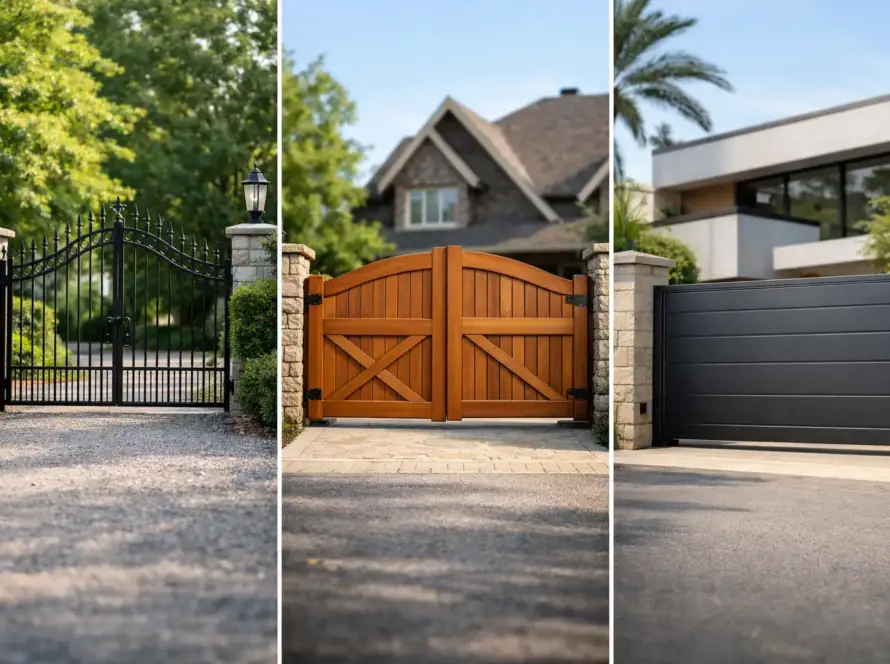
Material selection should reflect the level of security, maintenance, visibility, and style you want. Iron gates are a strong choice for homes and commercial properties that need durable security with a finished architectural look. Their open design can preserve visibility while clearly defining an entry.
Chain link gates are practical for side yards, equipment areas, service entrances, and commercial perimeters. They are cost-conscious, functional, and easy to pair with an existing chain link fence. Privacy slats or screening can change the appearance when more coverage is needed.
Wood gates can provide warmth and privacy, but they require thoughtful construction and regular maintenance, especially when exposed to sun and moisture. For heavier privacy designs, the frame and posts must be built to carry the load without twisting or sagging. The right material is not simply the one that looks best from the street. It is the one that will perform well in the location where it is installed.
If the gate connects to an existing fence, compare heights, picket or mesh spacing, top rails, and finish. A custom gate should look intentional, not like an afterthought attached to a different system.
Plan the Structure, Not Just the Gate Panel
A gate is only as dependable as the support system behind it. Heavy gates place constant stress on hinges and posts. If the posts are undersized, shallowly set, or installed in weak surrounding material, even a well-fabricated panel can sag over time.
Your plan should specify the post material, post size, footing approach, hinge type, latch, and stop. For larger gates, it may also include a drop rod, center stop, wheel, or automated operator. These parts are not minor add-ons. They determine whether the gate closes squarely, stays aligned, and resists unwanted movement.
Ask how the gate will be reinforced. A properly fabricated frame helps keep the panel square, particularly on wide or solid gates. For double gates, the two leaves must meet correctly at the center while still allowing for normal ground movement and everyday use.
Pick Hardware for Daily Use
Hardware should match the gate’s weight and how people will use it. A basic latch may be enough for a lightly used side gate, while a lockable latch, self-closing hinges, keypad access, or an electric strike may be better for a high-traffic or security-focused entry.
Do not overlook the simple details. Decide which side the latch should be on, whether it needs to be reachable from both sides, and whether the gate should close automatically. If children, pets, or a pool area are involved, safety requirements can affect hardware, gate height, and self-closing features. Requirements vary by property and location, so verify what applies before work begins.
Decide Whether Automation Makes Sense
An automatic driveway gate adds convenience and controlled entry, but it needs more planning than a manual gate. The operator must be matched to the gate type, weight, and frequency of use. Power access, safety devices, remote controls, keypad location, and manual release options should be considered before the gate is fabricated.
Automation is worthwhile when a gate is used frequently, access control is a priority, or drivers need to enter without leaving their vehicles. For a lightly used gate, a quality manual setup may be more practical and easier to maintain. The best choice depends on how the property operates, not on adding features for their own sake.
Check Property Requirements Before Fabrication
Before finalizing a design, confirm property-line locations, easements, homeowner association rules, and any local permit requirements that may apply. Commercial projects can also involve fire access, accessibility, and occupancy considerations. A gate should not obstruct required access routes or open into areas where it creates a hazard.
This step is particularly useful for rental and commercial properties, where an avoidable layout mistake can affect multiple users. Clear planning upfront is less expensive than moving posts or remaking a gate after installation.
Get a Clear Custom Gate Estimate
A useful estimate should cover more than the gate’s overall dimensions. It should identify the material and finish, fabrication details, posts, hardware, demolition or removal if needed, installation approach, and any automation components. If site conditions could change the work, such as damaged concrete or hidden utilities, ask how those conditions will be handled.
Photos are helpful for an initial conversation, but an on-site consultation is the best way to confirm measurements, swing direction, grade, and structural needs. At Hawklink Fences, clear communication at this stage helps ensure the finished gate fits the property, works as intended, and is built to last.
A custom gate is an investment in the way your property functions every day. Plan it around real access needs, sound structure, and the conditions on site, and you will have a gate that feels easy to use from the first opening to the thousandth.