A loose handrail can turn one missed step into a serious fall. A railing that looks fine from the street may still be the wrong height, have openings that are too wide, or lack the strength needed for daily use. Choosing safe stair railing options means looking beyond appearance and selecting a system built for the people who use the stairs, the setting, and the demands of the property.
For a Los Angeles home, rental property, storefront, or multifamily building, the right railing should feel solid in the hand, stay secure under pressure, and complement the property without becoming a maintenance problem. Material matters, but so do layout, mounting, code requirements, and professional installation.
Start With the Difference Between a Handrail and Guardrail
People often use the word “railing” for every stair safety system, but handrails and guardrails serve different jobs. A handrail is the graspable rail that gives someone support while going up or down stairs. It is especially important for children, older adults, guests carrying items, and anyone recovering from an injury.
A guardrail is the protective barrier along an open side of stairs, landings, balconies, or elevated walkways. Its main purpose is to prevent someone from falling over the edge. Many exterior staircases need both: a handrail for support and a guardrail for fall protection.
This distinction affects the design. A stylish top rail alone may not provide a comfortable, code-compliant grip. Likewise, a handrail mounted to a wall does not protect an open stair edge. Before choosing a material, identify where support is needed and where a full protective barrier is required.
The Best Safe Stair Railing Options by Material
No single railing material is right for every property. The best choice depends on exposure to weather, traffic levels, the architecture of the building, and how much upkeep the owner is willing to take on.
Steel Railings for Strength and Everyday Use
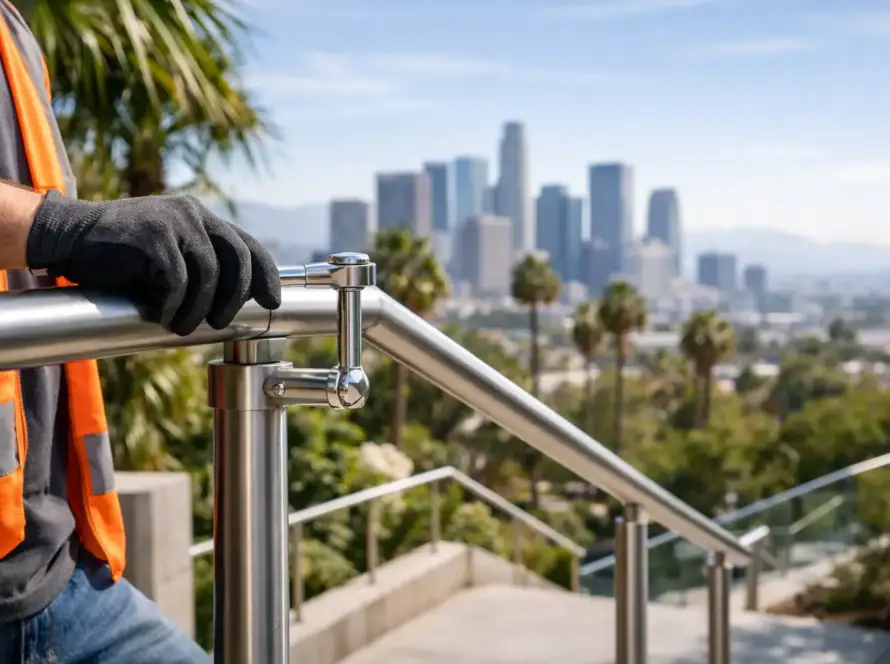
Fabricated steel railings are a dependable choice for exterior stairs, apartment buildings, commercial entries, and high-traffic walkways. Steel has the strength to handle regular use and can be custom-built around uneven grade changes, tight landings, and nonstandard stair layouts.
A properly finished steel railing can also offer a clean, modern look. Powder-coated finishes are available in many colors and provide a durable protective layer. In coastal or damp environments, preparation and coating quality matter a great deal. Damaged paint should be addressed promptly so moisture does not reach bare metal.
Steel is often the practical answer when safety and long-term durability are the priorities. It is heavier than aluminum and generally costs more than a basic prefabricated rail, but it offers the rigidity many property owners want at a busy entrance or elevated stairway.
Ornamental Iron for Security and Traditional Style
Iron railings remain a strong fit for Spanish, traditional, Mediterranean, and older Los Angeles properties. They provide substantial fall protection and security while allowing custom details such as scrolls, pickets, decorative caps, and shaped panels.
The trade-off is maintenance. Iron needs a quality coating and occasional inspection for chips, rust, loose connections, or water collecting at the base. When maintained correctly, it can last for years and continue to add curb appeal. For properties where the railing is visible from the street, custom iron can make a safety upgrade feel like an architectural improvement rather than an afterthought.
Aluminum Railings for Low-Maintenance Performance
Aluminum is lightweight, corrosion-resistant, and well suited to many exterior residential applications. It does not rust like ferrous metals, making it a useful choice around pools, patios, and stairs exposed to sprinklers or rain.
Aluminum systems are often available in standardized sections, which can help control costs and speed up installation. However, not every staircase works with an off-the-shelf panel. Complex layouts, heavy-use commercial stairs, or locations needing a more substantial security presence may call for custom steel or iron instead.
Cable Railing for Open Views
Cable railing uses tensioned stainless-steel cables between posts to create a clean, open appearance. It is popular on contemporary homes, decks, balconies, and stairways where preserving the view is a priority.
It can be a safe system when it is correctly engineered, installed, and tensioned. The details are not optional. Posts need to be strong enough to resist cable tension, cable spacing must meet applicable requirements, and the system should be checked periodically because cables can loosen over time.
Cable railing is not automatically the best solution for every household. Some families prefer vertical pickets because horizontal cable runs may be tempting for young children to climb. The setting, supervision, and local code requirements should guide that decision.
Glass Panels for Modern Protection Without Blocking Light
Tempered or laminated glass railing systems offer a clear barrier without closing off a space. They work well on modern staircases, balconies, and view-facing decks. A properly specified glass system can provide strong fall protection while keeping interiors and outdoor spaces visually open.
Glass requires regular cleaning, especially near busy entrances or in areas exposed to dust and fingerprints. It also demands precise installation. Hardware, panel thickness, edge treatment, and attachment points must be selected for the exact application. This is not a material to guess at or install with improvised fittings.
Wood Railings for Warmth, With More Maintenance
Wood can create a warm, welcoming look on covered porches and interior stairs. It is easy to shape and can match existing trim or architectural features. Outdoors, however, wood needs consistent care. Sun exposure, moisture, cracking, splintering, and insect damage can all affect its performance.
For an exterior stair railing, wood is usually best when it is well protected from weather and the owner is prepared to inspect, seal, or repaint it as needed. It may not be the most practical choice for a heavily used rental or commercial property.
What Makes a Stair Railing Safe?
Material is only part of the equation. A safe railing has the right geometry, secure anchoring, and a layout that does not create obvious hazards. Local building requirements can vary by property type and project scope, so measurements should be confirmed before fabrication begins.
Key safety considerations include:
- A continuous, easy-to-grip handrail where the stair requires one.
- Proper railing height along stairs, landings, and elevated edges.
- Baluster, picket, cable, or panel spacing that prevents unsafe openings.
- Posts and base connections anchored into sound framing, concrete, or structural steel.
- Smooth edges, secure welds, and no sharp projections that can catch clothing or cause injury.
- A design that allows clear access at doors, gates, walkways, and emergency exits.
The mounting surface deserves close attention. A strong rail attached to weak or deteriorated concrete is not a strong system. On repairs, the existing stairs, walls, and attachment points should be evaluated before new material is installed. Sometimes the safest and most cost-effective route is reinforcing the structure first.
Choosing a Railing for Homes, Rentals, and Commercial Properties
Homeowners often have more freedom to prioritize style, especially on a front porch, interior staircase, or backyard deck. A custom iron railing may complement the home, while cable or glass can suit a newer design. The goal is a system that feels dependable every day without creating a maintenance burden the homeowner did not expect.
For rental properties, durability and repairability usually carry more weight. Vertical steel or aluminum pickets are straightforward, difficult to climb, and easier to inspect between tenants. Property managers should also consider how the railing will hold up to moving furniture, daily foot traffic, and occasional misuse.
Commercial properties need an even more practical approach. Entry stairs, service areas, public walkways, and employee access points may see constant use. Strong steel handrails and guardrails are often the right fit because they can be fabricated for the site, securely mounted, and designed around gates, ramps, and traffic flow. Appearance still matters, but performance comes first.
Why Custom Fabrication Often Delivers a Better Fit
Stairs are rarely as simple as they appear. Sloped driveways, cracked concrete, uneven landings, narrow side yards, and older construction can make standard railing kits difficult to install correctly. A custom-fabricated railing can follow the actual stair pitch, land cleanly at posts and walls, and provide better coverage where people need support.
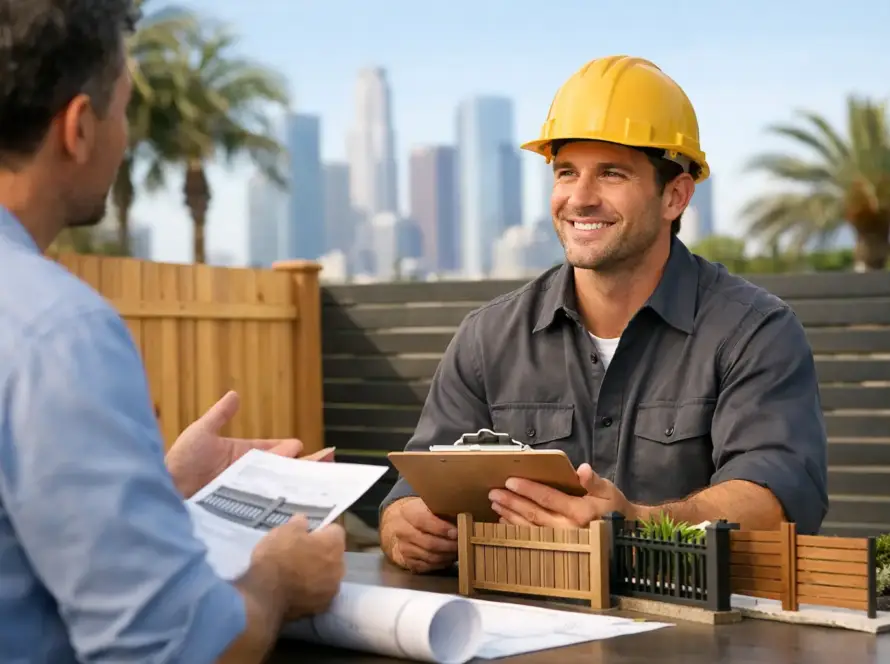
Professional measurement also helps avoid common problems such as a handrail ending too early, a gate interfering with the stair path, or an opening that is too wide near a landing. Hawklink Fences approaches railing work with the same focus used for gates and fencing: clear measurements, solid materials, and installation that is built to last.
Before approving a railing design, ask how it will be anchored, what finish will protect it, whether it suits the property’s use, and what maintenance it will need over the next several years. Those answers matter more than choosing a style from a photo.
A good stair railing should not call attention to itself every time someone uses it. It should simply be there when a hand reaches for support – solid, secure, and made for the way the property is actually used.