If you are replacing a fence because the last one warped, rusted, leaned, or rotted too soon, the real question is not just style. It is what fence lasts longest for your property, your budget, and the level of maintenance you can realistically keep up with. A fence can look great on day one and still be the wrong choice if it cannot handle weather, wear, and daily use over time.
For most property owners, the longest-lasting fence is not always the most expensive one. It is the one built from the right material, installed correctly, and matched to the job it needs to do. A front-yard decorative fence has different demands than a security fence around a commercial lot or a side-yard boundary exposed to sprinklers and sun all year.
What fence lasts longest in real-world conditions?
If we are talking about pure lifespan, chain link, ornamental iron, and certain high-quality metal fence systems usually outlast wood. Vinyl can also last a long time, but its performance depends heavily on product quality, installation, and exposure conditions. Wood often has the shortest lifespan unless it is maintained consistently and protected from moisture.
That does not mean one answer fits every property. The longest-lasting fence for a homeowner may be different from the best option for a rental property or business site. Security needs, appearance, maintenance expectations, and local climate all matter.
Chain link is one of the longest-lasting and most practical choices
For raw durability and value, chain link is hard to beat. A properly installed galvanized chain link fence can last decades. Add a vinyl coating and you get another layer of protection against corrosion and surface wear.
This is one reason chain link remains a strong choice for commercial properties, side yards, apartment buildings, schools, and homeowners who want security without constant upkeep. It handles weather well, does not warp like wood, and generally needs less maintenance than iron. If a section is damaged, repairs are often more straightforward too.
The trade-off is appearance. Some property owners want more privacy or a higher-end decorative look. Chain link is built for function first. Still, if your priority is longevity, low maintenance, and reliable perimeter security, it belongs near the top of the list.
Ornamental iron can last a very long time with proper care
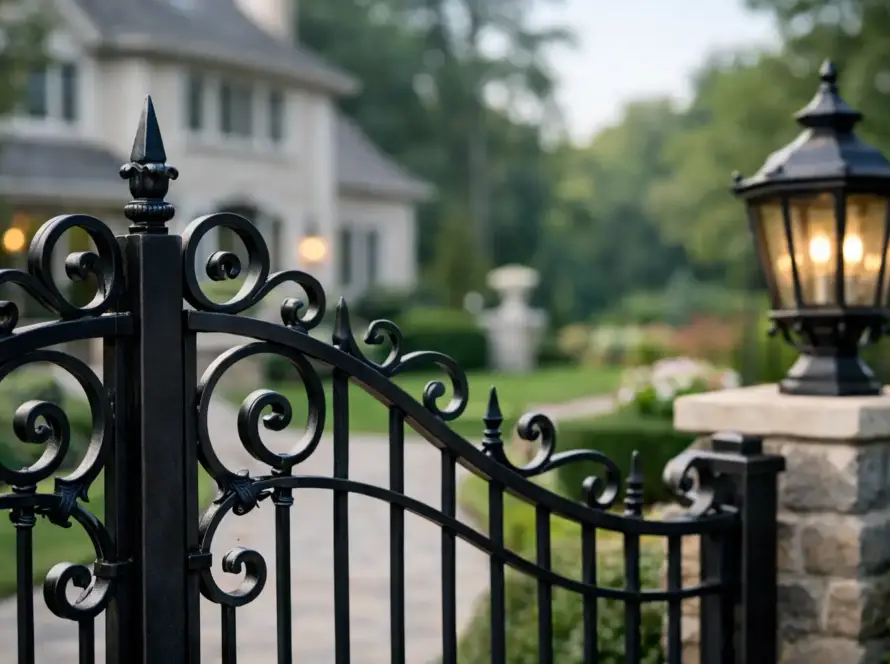
Iron fencing has a reputation for strength for a reason. A well-fabricated and properly finished iron fence can last for decades while offering a more upscale look than chain link. It works especially well for front-yard fencing, gated entries, and properties where appearance matters as much as security.
The key phrase here is properly finished. Iron is strong, but it is still vulnerable to rust if the protective coating fails or the fence is neglected. In dry climates, iron often performs very well, but moisture, sprinklers, and coastal air can shorten its life if maintenance is ignored.
That does not make iron a weak option. It just means it rewards good workmanship and occasional upkeep. When fabricated well and installed correctly, it can be one of the longest-lasting fence types available.
Vinyl can last a long time, but quality matters more than many people realize
Vinyl fencing is often marketed as a low-maintenance solution, and that part is generally true. It does not need painting, it will not rot, and it is not vulnerable to termites. For many homeowners, that makes it attractive right away.
But not all vinyl fences age the same way. Lower-grade materials can become brittle, fade, crack, or sag, especially in areas with strong sun and temperature changes. A vinyl fence may look simple from the outside, but thickness, reinforcement, and installation quality make a big difference in how long it lasts.
When the material is high quality and the posts are set correctly, vinyl can be a long-term option. The downside is that when it does fail, repairs may be less forgiving than with metal. Cracked panels usually need replacement rather than a simple patch.
Wood can last, but it usually requires the most maintenance
Wood fences have classic curb appeal, and for privacy they are still a popular choice. Cedar and redwood generally perform better than lower-cost woods, and pressure-treated lumber can help with resistance to insects and moisture. Even so, wood usually does not win the lifespan contest.
Sun, moisture, ground contact, and sprinkler exposure all work against wood over time. Boards can warp, posts can rot, and finishes wear down. If you stay on top of sealing, staining, repairs, and drainage, a wood fence can last many years. If maintenance slips, its life drops quickly.
That makes wood a reasonable choice for appearance-driven projects, but less ideal if your top priority is putting up a fence and getting the longest life with the fewest future headaches.
Installation has as much to do with lifespan as material
A good fence material can still fail early if the installation is rushed. This is where many property owners get disappointed. They choose a solid product, but the posts are not set deep enough, drainage is ignored, hardware is cheap, or corners are cut during fabrication.
Post spacing, footing depth, gate alignment, weld quality, coatings, and site grading all affect how long a fence stays straight, secure, and serviceable. Gates are especially telling. A fence may stand, but if the gate sags, drags, or stops latching after a short time, the system is already underperforming.
This is one reason workmanship matters so much. A fence built to last is not just about buying better material. It is about making sure the whole system is designed and installed correctly from the beginning.
Climate and property conditions change the answer
In Southern California, long sun exposure, dry heat, irrigation overspray, and occasional moisture all affect fence life differently. A fence near heavy sprinklers may corrode or rot faster than one on the same street with better drainage. A decorative iron fence in a shaded front yard may age differently than a chain link perimeter around a hard-use commercial site.
That is why asking what fence lasts longest should always come with a second question: longest where, and under what conditions? A property manager may need impact resistance and easy repairs. A homeowner may care more about curb appeal and low upkeep. A business owner may need security first and appearance second.
So which fence is usually the best long-term investment?
For many properties, galvanized or vinyl-coated chain link delivers the best combination of lifespan, low maintenance, and cost-effectiveness. It is practical, proven, and durable. If you want a stronger visual statement and are willing to do some upkeep, ornamental iron is also a strong long-term choice.
Vinyl makes sense when low maintenance and a clean residential look are top priorities, but it is worth paying attention to quality. Wood is often chosen for privacy and appearance, not because it lasts longest.
The best decision usually comes down to being honest about priorities. If you want the least maintenance and the longest service life for the money, chain link is often the answer. If you want durability with a more refined look, iron may be worth the added care. If you want privacy and a softer appearance, vinyl or wood may still make sense, but you should go in with clear expectations.
A smart way to choose what fence lasts longest for your property
Instead of asking for the single longest-lasting fence in the abstract, think about your fence in terms of use. Is it there for security, privacy, appearance, pet containment, tenant durability, or all of the above? Once that is clear, the right material becomes easier to identify.
A dependable contractor should be able to walk the site, look at slope, moisture exposure, access points, and gate needs, then recommend a fence system that fits the property instead of pushing one product for every job. That practical approach usually leads to a fence that lasts longer because it was chosen for the real conditions it will face.
At Hawklink Fences, that is how we look at it. The longest-lasting fence is the one built with the right material, solid craftsmanship, and no shortcuts. If you start there, you are far more likely to end up with a fence that still looks good and performs well years down the line.
A fence should not become a repeat project sooner than it needs to. The right choice now can save you a lot of repair calls, frustration, and replacement cost later.